Yara Wagner · 12 October 2026
Poland's Technical Schools Advance Infrastructure with Cross-Border Cooperation Funds
Poland's technical schools have received substantial upgrades to their facilities through a series of cross-border support programs funded primarily by European Union mechanisms, and these initiatives continue to reshape vocational education across multiple regions. Data from the Polish Ministry of Education and Science shows that over 150 institutions participated in modernization efforts between 2023 and 2025, with funding channeled through frameworks such as Interreg and Erasmus+ that emphasize transnational partnerships.
Program Structures and Funding Mechanisms
Cross-border programs operate on principles of shared resources between Poland and neighboring countries including Germany, the Czech Republic, and Slovakia, where joint applications allow schools to access grants for equipment purchases, building renovations, and digital infrastructure improvements. The European Commission reports that allocations for vocational training facilities in Poland reached €320 million during the current programming period, and these amounts support targeted projects that align with labor market demands in engineering, manufacturing, and information technology sectors.
Observers note that schools in border areas like Lower Silesia and the Lubusz Voivodeship benefit most directly because geographic proximity facilitates ongoing collaboration with partner institutions abroad. Project timelines often span three to five years, and participating schools must demonstrate measurable outcomes in student enrollment and skill acquisition to secure continued disbursements.
Facility Upgrades in Practice
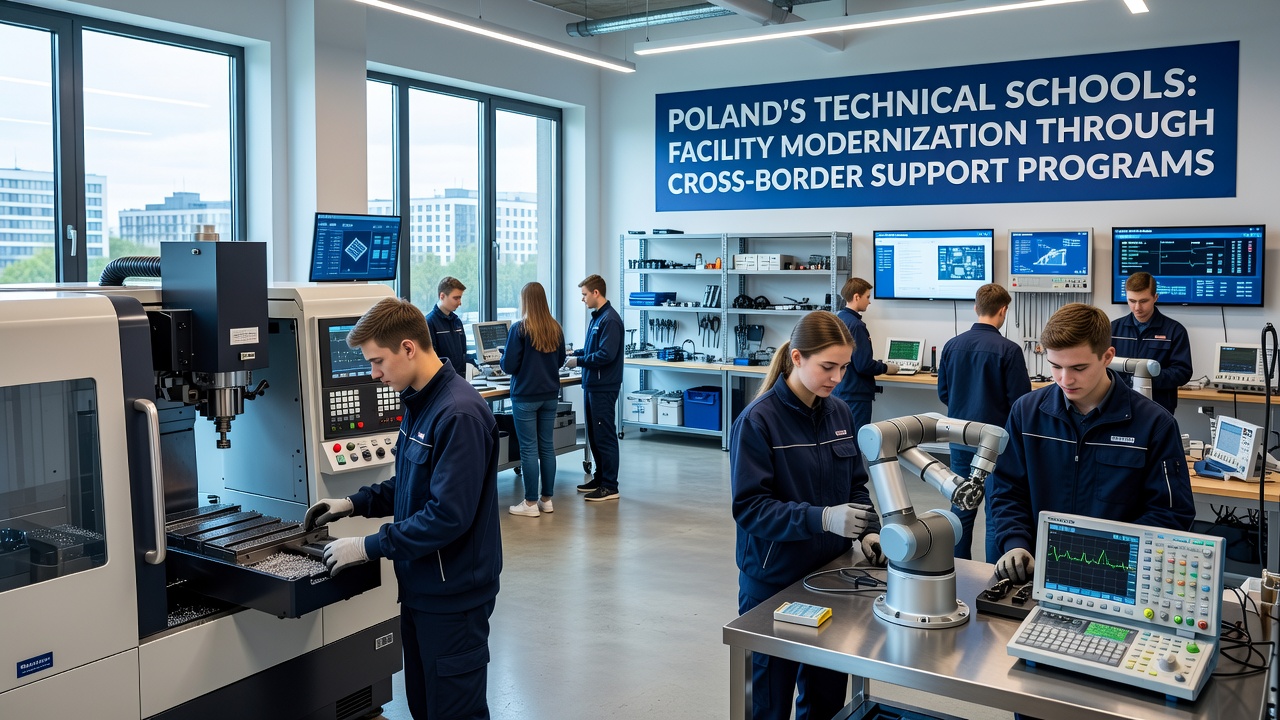
Renovations typically include installation of advanced machinery in workshops, expansion of laboratory spaces, and integration of smart classroom technologies that enable remote instruction with international partners. One study conducted by the Warsaw University of Technology revealed that upgraded facilities led to a 22 percent increase in practical training hours per student at participating sites, and this shift occurred without corresponding rises in operational costs due to energy-efficient designs funded under the same grants.
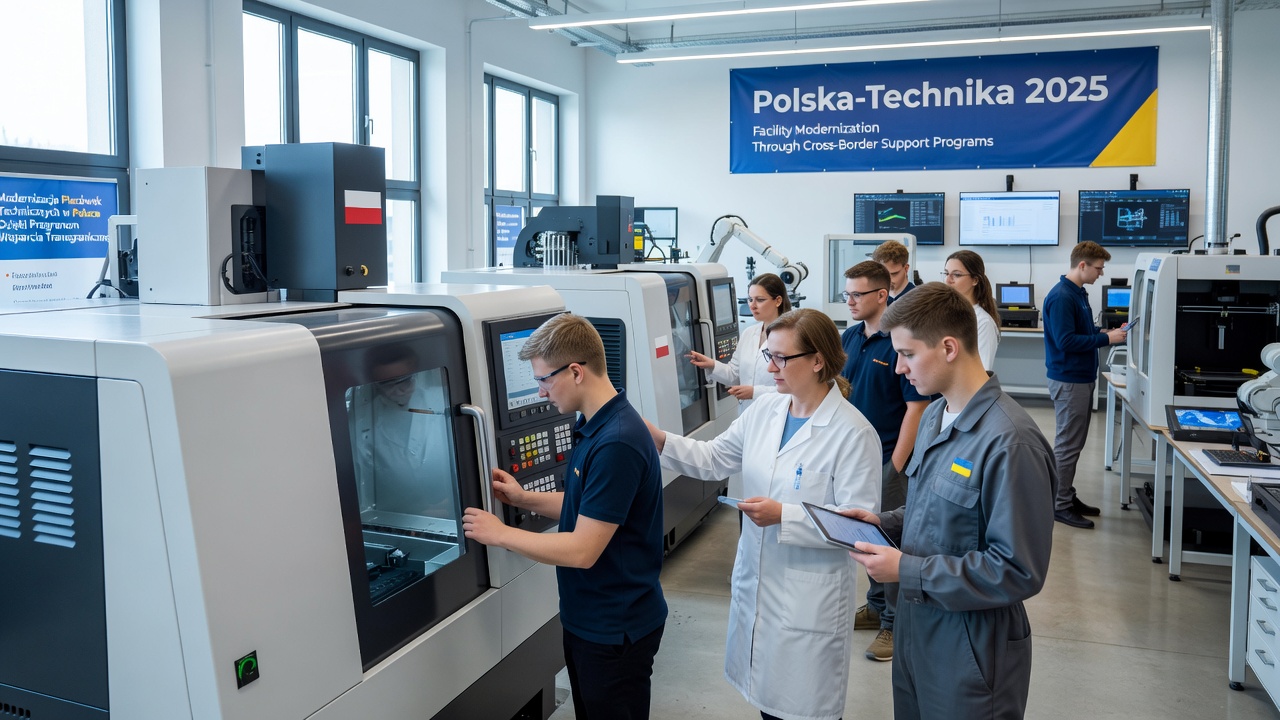
Examples include the Technical School Complex in Wrocław, which partnered with German counterparts to install CNC milling equipment and virtual reality simulation stations, while schools in Kraków received funding for cybersecurity labs through agreements with Austrian educational networks. These projects follow standardized evaluation protocols established by the European Centre for the Development of Vocational Training, and progress reports are submitted quarterly to maintain transparency.
Regional Variations and Enrollment Trends
Enrollment figures indicate that technical schools in western Poland recorded higher participation rates in cross-border exchanges than those in eastern regions, according to statistics compiled by the Central Statistical Office of Poland. Yet programs have expanded eastward through additional funding rounds that prioritize underserved areas, and this expansion aligns with broader EU goals for equitable access to quality vocational education.
Training programs now incorporate modules developed jointly with foreign partners, covering topics from sustainable manufacturing processes to automated systems maintenance, and graduates from these institutions show improved employment rates within six months of completion based on tracking data maintained by regional labor offices.
Developments Scheduled for October 2026
Planning documents indicate that a major evaluation conference will convene in October 2026 in Gdańsk to assess program impacts and outline extensions into the next funding cycle. Organizers expect representatives from over 20 countries to review case studies and discuss refinements to application procedures, while new pilot projects focused on artificial intelligence integration in technical curricula will launch concurrently.
Authorities anticipate that these gatherings will generate updated guidelines for facility standards, and schools that complete current modernization phases will serve as reference models for subsequent applicants. Coordination teams continue to refine metrics for success that incorporate both quantitative facility assessments and qualitative feedback from instructors and students.
Conclusion
Cross-border support programs have delivered concrete infrastructure improvements to Poland's technical schools, and ongoing efforts through 2026 will determine the long-term sustainability of these gains. Government agencies and international bodies maintain detailed records of expenditures and outcomes, which researchers continue to analyze for patterns that could inform similar initiatives elsewhere in Europe.